


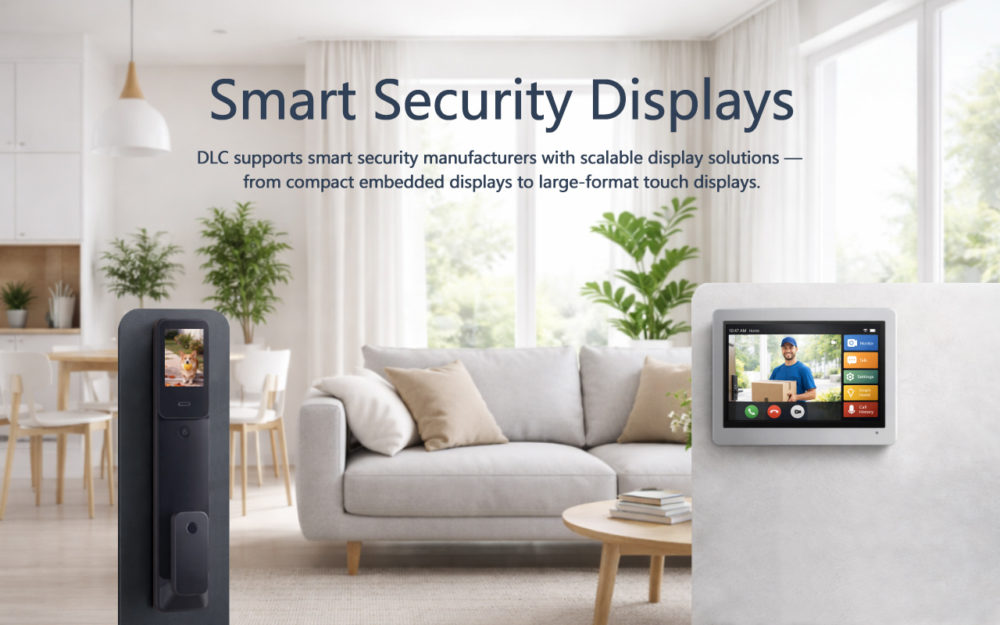
Smart Security is evolving from individual devices into integrated systems that rely on clear, intuitive visual interaction. Across access control, video communication, and intelligent terminals, displays have become a core enabling technology.
TFT displays define how users interact with security systems, shaping usability, trust, and perceived product quality. For Smart Security manufacturers, the right display solution is not just a component choice, it is a strategic foundation for scalable, reliable, and future-ready product platforms.
The Smart Security Market: From Devices to Systems
The Smart Security market has expanded well beyond traditional mechanical locks or standalone intercoms. Current solutions increasingly integrate:
- Video door locks with cameras and real-time monitoring
- Indoor video intercom systems for visitor verification
- Access control panels with touch-based authentication
- Mobile apps and cloud-based management platforms
As these devices converge into a unified security experience, human–machine interaction (HMI) becomes critical. Displays serve as the primary interface between users and the system, enabling visual confirmation, intuitive control, and immediate feedback.
For OEMs and system integrators, this convergence also means that display requirements must balance consumer-grade experience with industrial-grade reliability.
Smart Security Terminals and the Role of Display
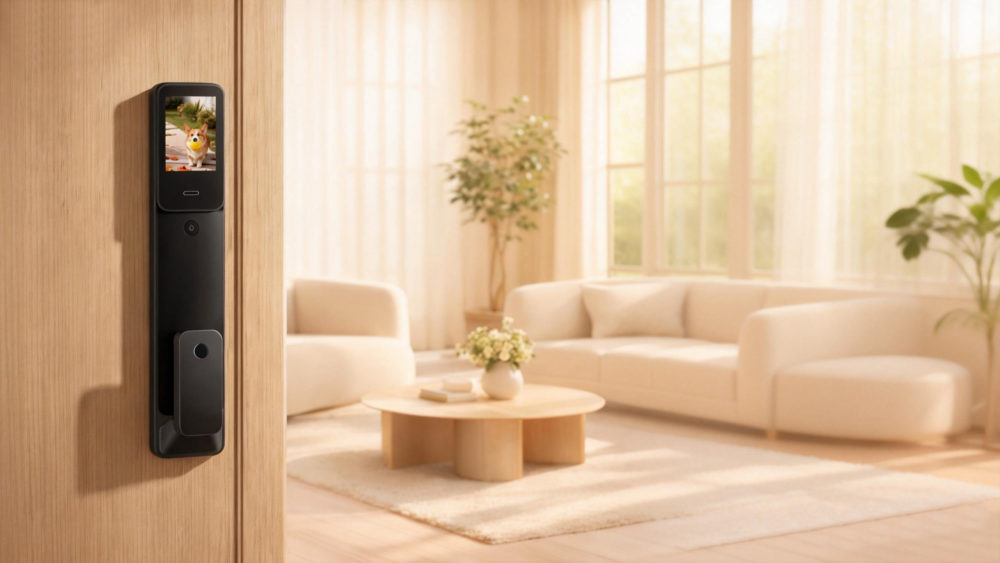
1: Smart Video Door Locks
Smart door locks are no longer limited to keypads and status LEDs. Many next-generation models integrate:
- Embedded cameras
- Live visitor preview
- On-device visitor image display
- Touch-based interaction
In this category, displays are typically compact and highly integrated into the lock body. The display must support:
- Clear visibility at close viewing distance
- Fast wake-up and low power consumption
- Slim mechanical integration with minimal bezel
While smartphones remain the primary remote viewing device, on-device displays significantly enhance perceived intelligence and premium positioning.
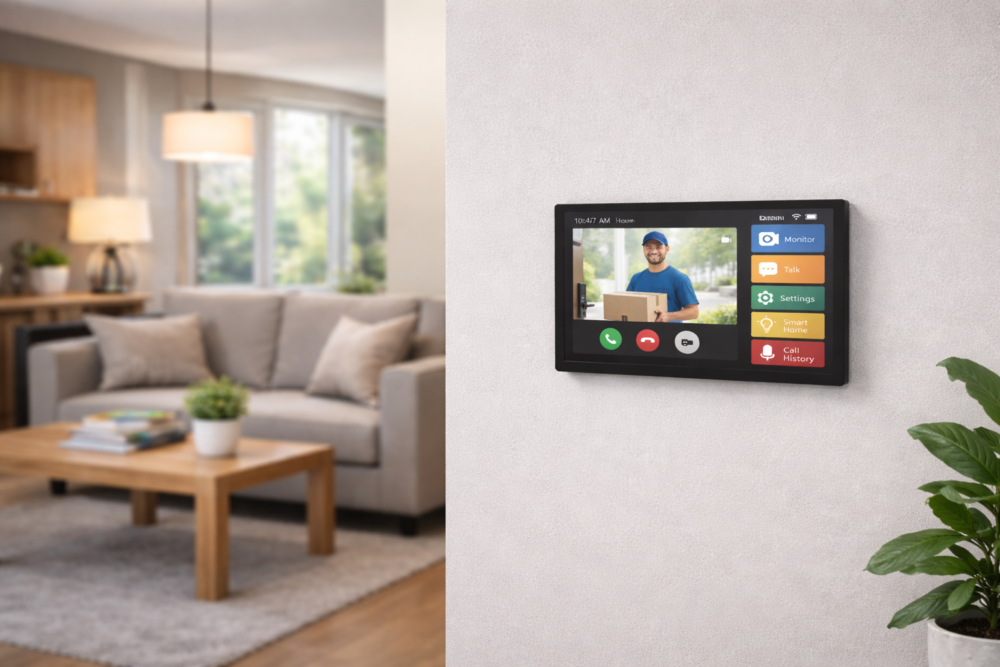
2. Indoor Video Intercom Monitors
Indoor video intercoms act as the visual hub of residential and multi-dwelling security systems. Compared to smart locks, these devices prioritize:
- Larger screen size for comfortable viewing
- Continuous or frequent daily operation
- Touch interaction for door release and system control
Here, the display is the dominant component, defining the overall form factor and user experience. Screen quality, viewing angle, and long-term supply stability are often more important than extreme miniaturization.
What Display Manufacturers Must Deliver for Smart Security
Across different Smart Security terminals, manufacturers expect display solutions that balance performance, integration, and long-term reliability. At a high level, this means displays that deliver clear visual performance, support compact and flexible mechanical integration, and remain available and consistent over extended product lifecycles. For Smart Security OEMs, working with a display partner that understands these baseline requirements helps reduce development risk and enables faster, more scalable product platforms.
Why Display Strategy Matters for Smart Security OEMs
For Smart Security manufacturers, the display is not just a component, it is a strategic design decision. The right display solution can:
- Enable cleaner industrial design
- Improve system usability and differentiation
- Reduce engineering risk and time to market
- Support long-term product platforms rather than single models
As the market moves toward more integrated and intelligent security systems, display choices increasingly influence both user perception and operational success.
Conclusion and Future Outlook
Smart Security is no longer defined solely by locks, cameras, or networks, it is defined by interaction. TFT displays enable that interaction, transforming security hardware into intuitive, trustworthy systems.
For manufacturers developing a wide range of smart security devices, a well-considered display strategy is essential. By aligning display selection with application requirements and lifecycle expectations, OEMs can build smarter, more reliable, and more competitive security products.
Expanding the Smart Security Display Portfolio
As Smart Security continues to evolve, new device categories and interaction scenarios are emerging,from distributed access points and wall-mounted control panels to integrated security hubs and multi-function terminals. Display requirements will continue to diversify in size, interface, performance, and integration complexity.
DLC is actively expanding its Smart Security display portfolio to address these evolving needs. Beyond today’s mainstream applications, they continue to develop scalable TFT display solutions that support new form factors, interaction models, and system architectures across the Smart Security market.
If you want more information or if you have any questions about this product, please contact Nijkerk Electronics!